
Comparing Consumer Health Data Apps
Messy middle

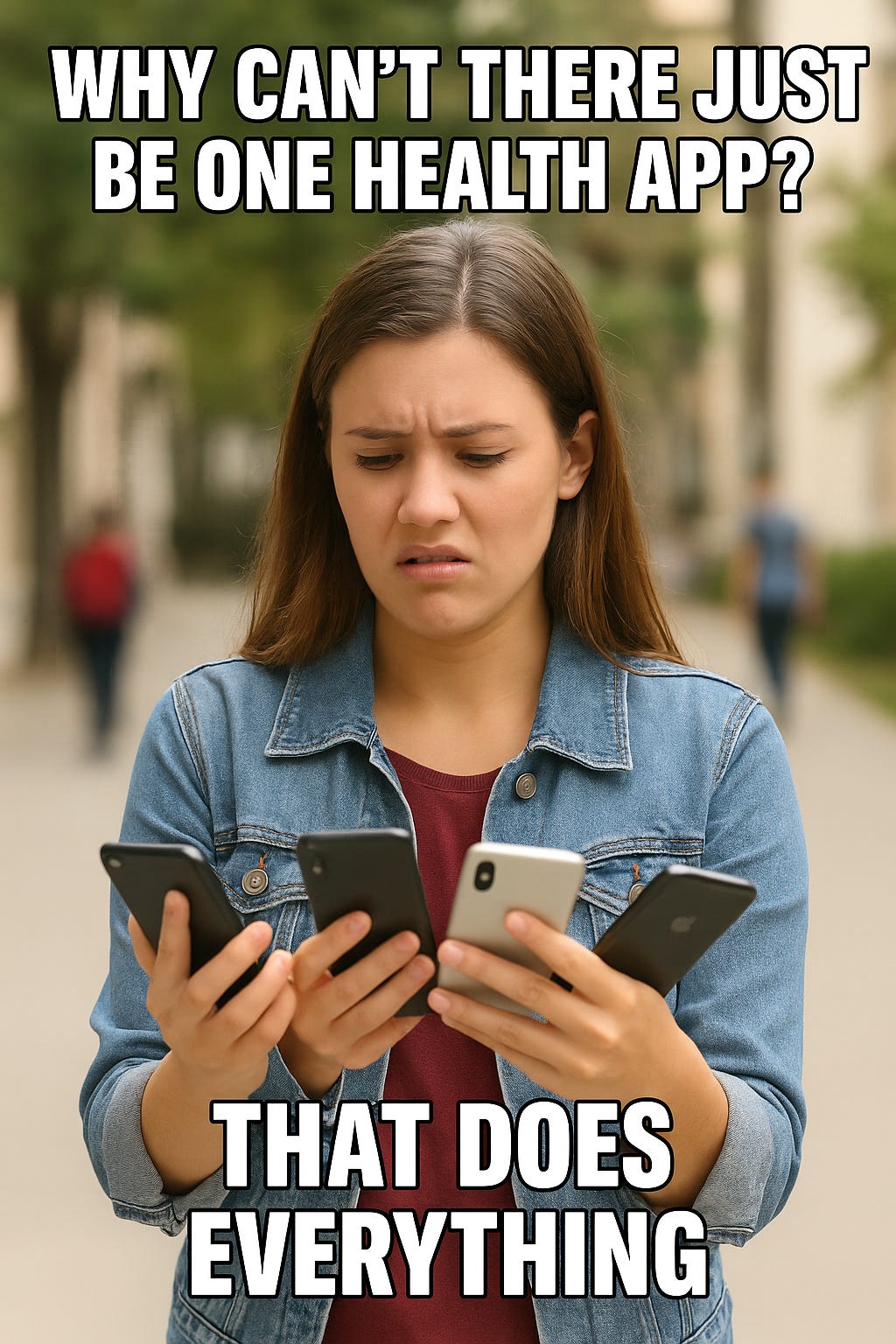
The Consumer Health Stack: Apple Health vs. MyChart vs. Health Bank One vs. Verily Me
Thesis: There isn’t one “health app.” There’s a stack. Apple Health owns daily tracking and UX. MyChart owns the clinical front door. Health Bank One owns longitudinal records and patient control. Verily Me is the emerging operating layer for proactive guidance.
TL;DR
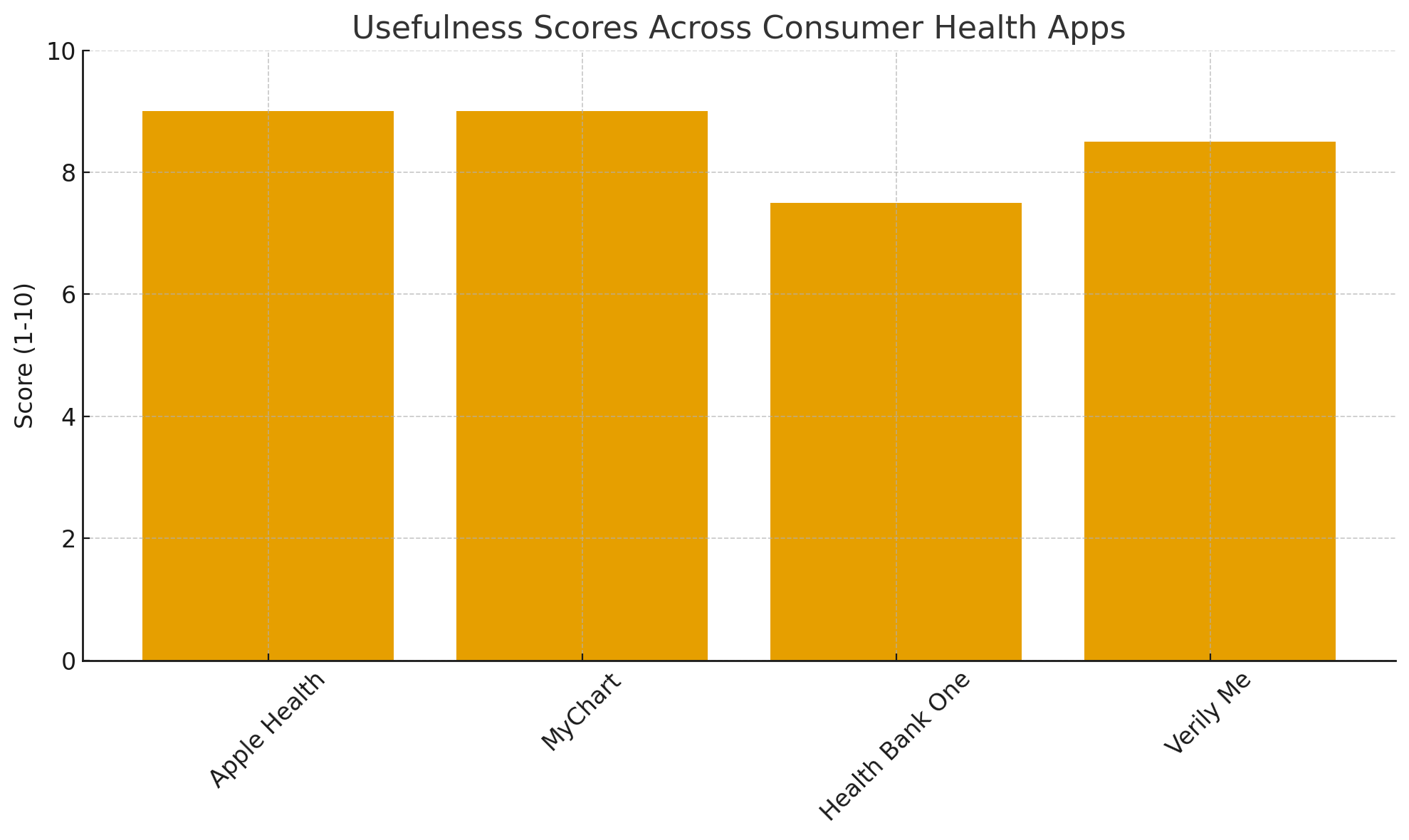
Apple Health Best consumer UX and device ecosystem; great at trends, weak on clinical guidance. Need to remember your password for your patient portal to connect. Usefulness: 9/10 (iPhone users).
MyChart Only app that connects you to your doctors for results, messages, refills, and visits. Utilitarian UI, but indispensable. Need to remember your password but if you go to an Epic Health System its the best feature wise. Usefulness: 9/10 (when in care).
Health Bank One Patient-controlled vault + AI that actually fetches records from anywhere. Superb hands off authentication and id verification, Subscription and setup required. Work in progress but improving with iterations (Nice feature to retrieve records in any method, Patient Right of Access, via Mail) UI/UX very elementary Usefulness: 7.5/10 (higher for complex histories).
Verily Me Free records + clinician recommendations + AI (“Violet”) + real-time nutrition tips. Does not pull in all your data yet (Only connects via HIE’s) New, but high ceiling. Usefulness: 8.5/10 (watch this space).
What each does uniquely well
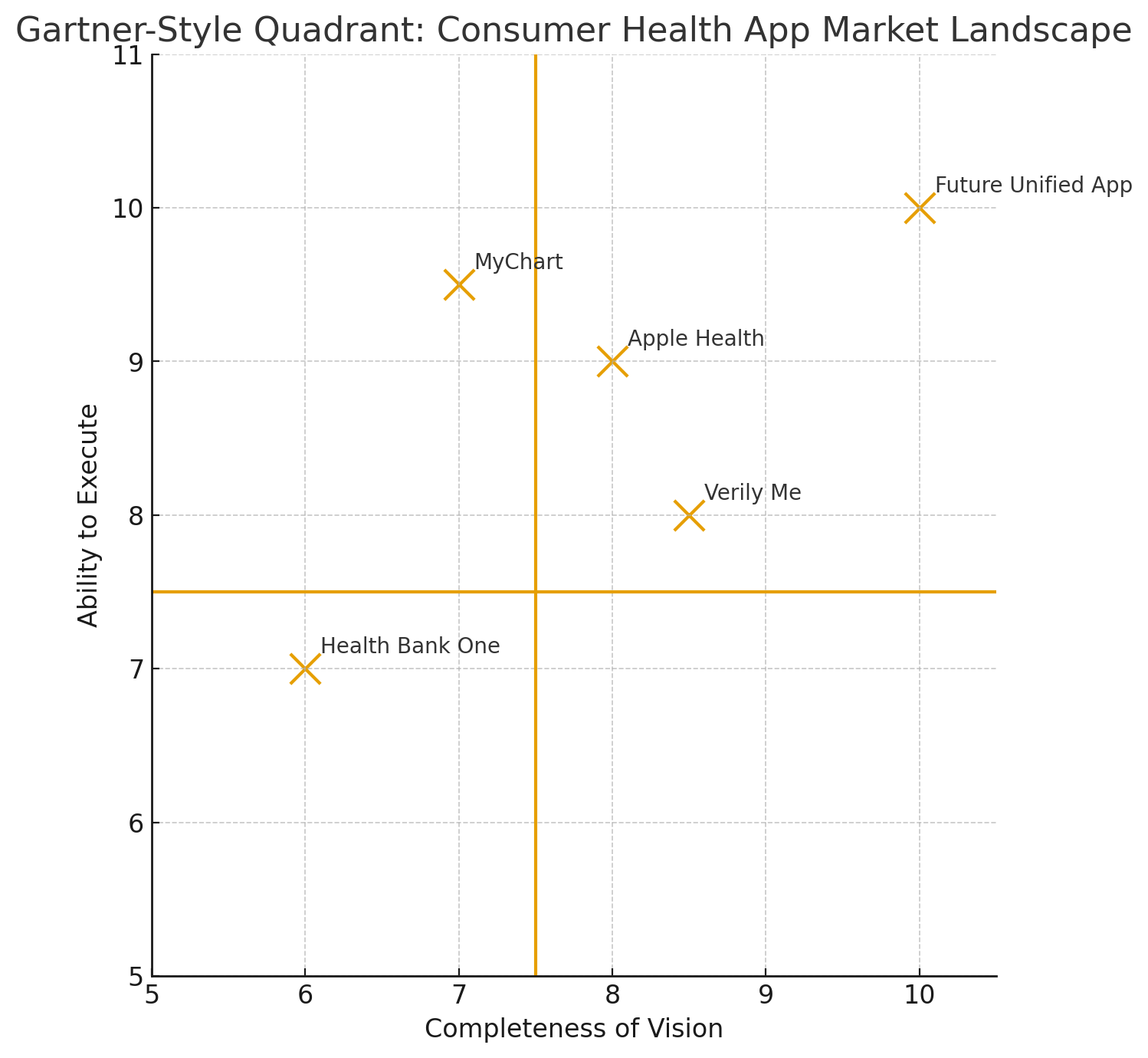
Apple Health: Unified wellness hub with polished charts, HealthKit integrations, and privacy by design.
MyChart: The clinical workflow: scheduling, secure messaging, test results, telehealth directly inside your provider’s system.
Health Bank One: Concierge-style record retrieval from any provider + AI explanations; puts you, not a portal, in control.
Verily Me: Clinician-reviewed personalized recommendations plus an AI that answers questions from your actual record; adds lifestyle nudges (meal photo feedback).
Where they fall short
Apple Health: iOS-only; no clinician coaching; health-records integration depends on provider participation and remembering your password.
MyChart: Siloed by health system; minimal insights; workflow over UX. Based on classic Epic patient portal.
Health Bank One: Paid; initial effort to aggregate; UI is more document-centric than dashboard-centric. Minimal Data display.
Verily Me: New/beta; record completeness varies by HIE connections; trust and cadence of clinician input still proving out.
Who should use what (quick mapping)
General consumers / Apple Watch crowd: Apple Health (+ keep MyChart for visits).
Patients in active treatment or managing meds: MyChart (non-negotiable).
Multi-provider / complex history / caregivers: Health Bank One (single source of truth + AI summaries).
Preventive care optimizers / chronic condition mgmt: Verily Me (free clinician recs + AI + lifestyle).
How they fit together (the stack)
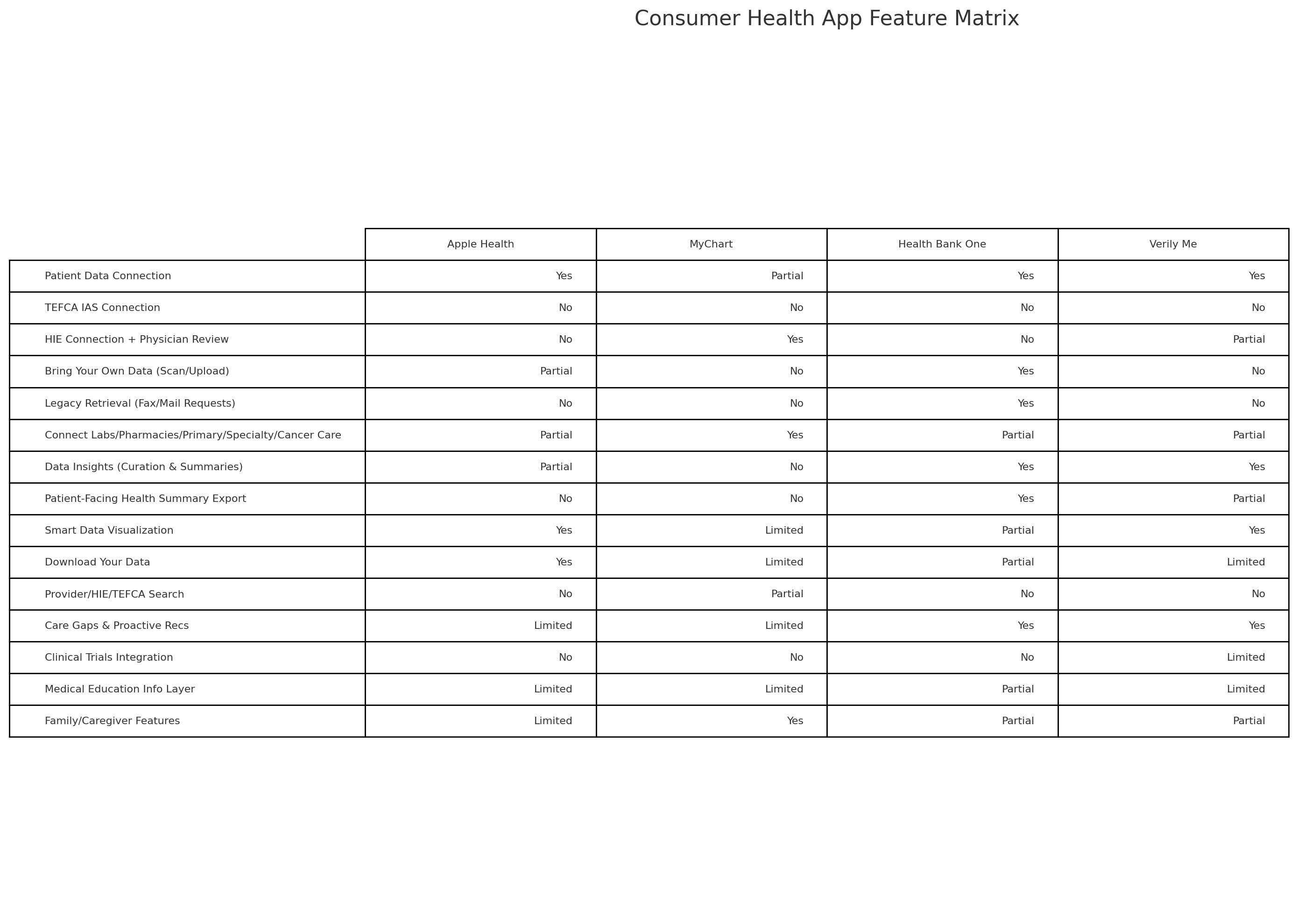
Track & visualize Apple Health
Engage your clinicians MyChart
Own your longitudinal record Health Bank One
Get proactive guidance Verily Me
Bottom line
The winning move isn’t picking one app it’s assembling the right consumer health stack for your needs: Apple Health for daily signals, MyChart for clinical actions, Health Bank One for complete ownership, and Verily Me to turn data into timely decisions.
What would it take to create a app that does it all? Leave your ideas in the comments.
Disclaimer
This assessment reflects a snapshot of publicly available information and documentation as of the time of writing. There are many consumer health apps in the market, and some may not be included here. Features, integrations, and capabilities evolve quickly, and some details may be incomplete, outdated, or interpreted incorrectly.
If you notice any inaccuracies or have updates I should factor in, please reach out directly I welcome corrections, feedback, and additional insights to keep this comparison as accurate and useful as possible.
In 2025 the only person who should own their health data is the patient. As this becomes more and more overlooked, marketing trends will continue to push treatment over prevention.
The only way I see it play it out in the patient's favor is if my patient owns/knows their health information and invites me to enter it and edit it.
Too complex? Only because doctors are using nerd-speak to write charts, often for med-mal prevention. But there is no need for us to use this much jargon or make the lab values and test results this complex to decipher.